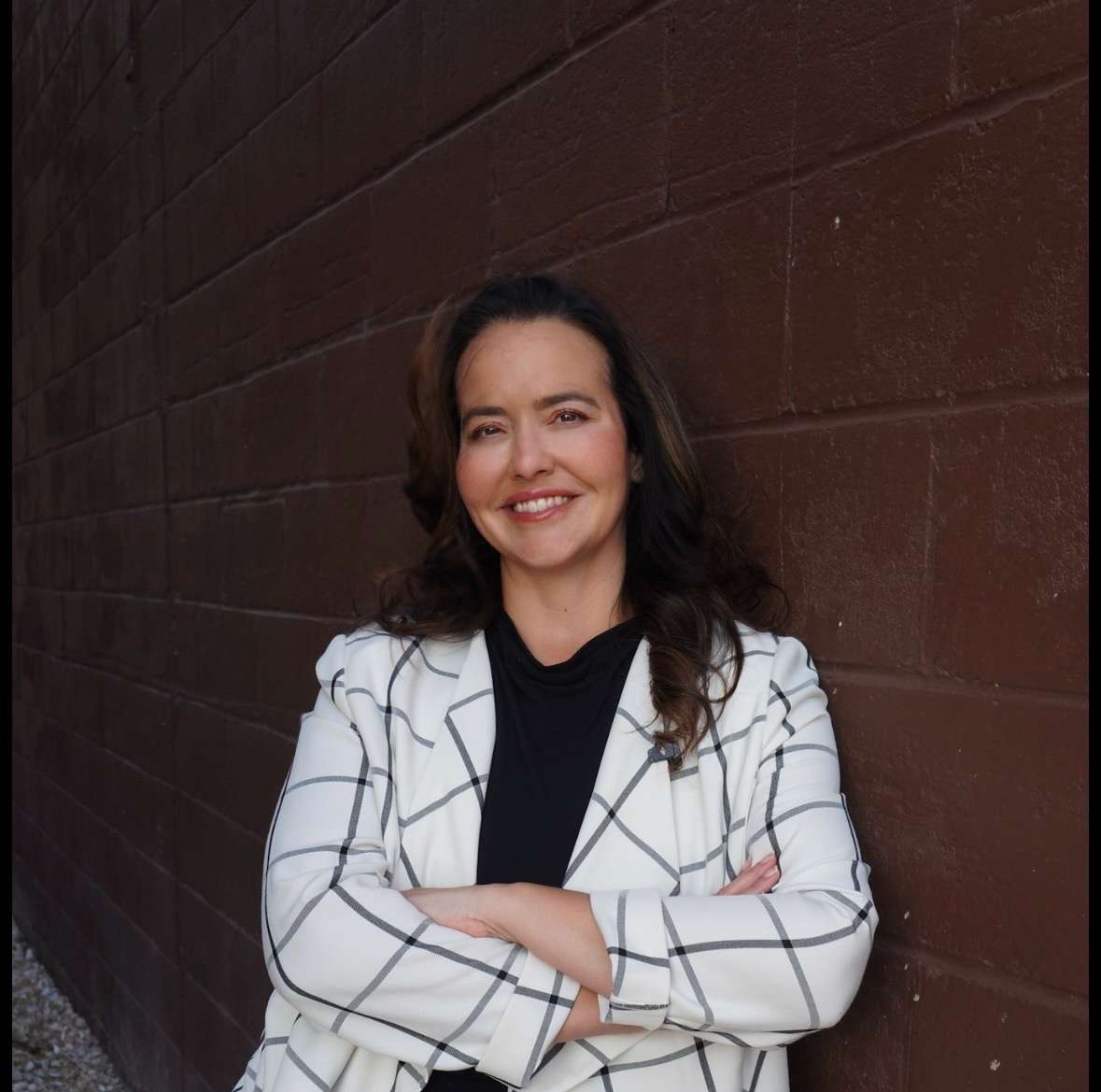
Democratic candidate Jennifer Kirkman is challenging Republican incumbent Matt Rinker for the District 99 seat in the Iowa House of Representatives. The Burlington Beacon provided each candidate with a list of questions. Below is the full text of the responses submitted by Kirkman. (Rinker's responses are in a separate post.)
Jennifer Kirkman (D)
1. What are your top three legislative priorities, and what action will you take to address them?
My top three priorities are fully funding public education, building an economy where Southeast Iowa families and business can thrive, and fighting for access to affordable, high-quality healthcare. Overall, my platform is focused on recruitment and retention.
First, we must fully fund our public schools. Strong public schools are the foundation of our communities, a skilled workforce, and our future. I advocate for state funding that reflects the cost of educating our children well, supports competitive teacher salaries, and provides schools with the resources they need to meet the needs of every child. I advocate for restoring meaningful collective bargaining rights to our public sector employees, providing State Supplemental Aid (SSA) funding at an amount consistent with the rate of inflation or above it, protecting IPERS, and addressing how the ESA school voucher program is reformed or phased out, including returning public oversight to the use of public taxpayer dollars, income maximums for those using ESA dollars, and requirements for private schools to accept students. I will also fight to ensure public dollars are used responsibly and that our public schools are not left behind while state resources are directed elsewhere.
Second, we must build a stronger, more stable economy for the people who already call Southeast Iowa home while creating opportunities for others to come and build their futures here. That means helping existing businesses thrive, supporting our unions and entrepreneurs, attracting new employers, investing in infrastructure, and making sure local governments have the resources to provide essential services. It also means investing in workforce development, affordable housing, childcare, and career and technical education. Recruiting employers is important but retaining our existing businesses and helping them grow is just as critical. Ultimately, economic development is about creating communities where people want to stay, return, raise families, and build a life. We need solutions for barriers like housing and childcare that make it harder for people to work and businesses to hire while supporting our local services, libraries, restaurants, recreation and vibrant downtown.
Third, every Iowan deserves access to affordable, high-quality healthcare close to home. We must improve access to healthcare, including mental health services and substance-use treatment. I will work to attract healthcare providers to rural communities, hold insurance companies accountable, and replace our privatized Medicaid model with a more accountable system that puts patients ahead of corporate profits. Access to healthcare is fundamental to making Southeast Iowa a place where people can build careers, raise families, and grow old with dignity.
I will also fight for meaningful action on Iowa’s water quality crisis and rising cancer rates that ends the focus on simply treating polluted water and instead focuses on upstream ways to end the pollution at its source, protect our land and water, and demand accountability.
The government should work for the people. I’m ready to defend constitutional rights, respect appropriate local control, demand responsibly oversight of taxpayer dollars, and judge legislation by its real-world consequences rather than blindly following political talking points. We need to make decisions based on what works for Iowans, not partisan politics, pet projects or huge corporations. Me legal career has taught me to anticipate unintended consequences, listen to competing perspectives, work through complicated problems, and never forget the human being at the other end of a law. It’s time to return to putting PEOPLE first.
2. What do you see as the biggest economic challenge facing Burlington and southeast Iowa, and what can the state legislature do to address it?
One of the biggest economic challenges facing Southeast Iowa is building and retaining a strong workforce while ensuring that working families can realistically afford to live, work, raise their children, and build a future. We cannot expect Southeast Iowa to thrive if employers struggle to find workers, young people feel they must leave to find opportunity, and families struggle to afford housing, childcare, healthcare, and other necessities. When young people leave and don’t return, or when working families cannot find affordable housing, childcare, healthcare, or other necessities, we lose more than workers. We lose taxpayers, customers for local business, future entrepreneurs, volunteers, community leaders, and families who enroll their children in our schools. A shrinking workforce and population spread the costs of maintaining our communities across fewer people, making it harder to sustain the services and quality of life that attract families and employers in the first place.
The legislature can help by investing in public education and community colleges, expanding apprenticeships, trades, and career and technical training, implementing employer-education partnerships that prepare people for jobs that exist in our region, supporting small businesses, and improving access to affordable childcare and housing. We should also pursue responsible economic development that attracts new employers without overlooking the businesses that have supported our communities for generations.
Recruitment and retention must be central to our economic strategy. That means recruiting businesses and skilled workers while retaining our teachers, healthcare professionals, skilled tradespeople, and young families. We should evaluate economic development incentives based on measurable results, including good-paying jobs, local investment, and long-term economic stability.
As a small business owner myself, economic challenges include having a skilled staff and being able to keep up with the rising costs of business ownership. Evaluating and proposing ways that we could keep down the rising costs of property taxes, health and other insurance, utility costs, are all essential for small businesses to succeed. State government should be looking for responsible ways to control the pressures of doing business while ensuring our communities can still fund the schools, infrastructure, public safety, and services that businesses depend on.
The legislature needs to recognize that workforce development is much bigger than job creation. We should invest in public education, community colleges, apprenticeships, career and technical education, and employer-education programs that prepare people for jobs that exist in our region. We also need to address affordable housing and childcare as economic infrastructure. Iowa Workforce Development itself identifies access to affordable healthcare as a workforce issue because it directly affects employers’ ability to hire and retain workers.
Housing deserves the same attention. In 2026, the Iowa Economic Development Authority awarded $39.84 million through the Workforce Housing Tax Credit program to projects expected to create 2,093 homes statewide, including the redevelopment of an underused former hospital in Keokuk into at least 32 apartments. I want the State to continue looking for ways to help communities like ours rehabilitate aging housing, redevelop underused properties, encourage homeownership, and create attainable housing.
Economic development also needs to work for the businesses that are already here. Recruiting new employers is important, but we cannot overlook the local businesses that have employed our neighbors, supported our schools, sponsored our Little League teams, contributed to non-profits, and paid taxes in our communities for decades. When we provide incentives, taxpayers deserve to know what they are getting in return. Those investments should be tied to measurable outcomes such as good-paying jobs, local investment, workforce growth, and long-term economic stability.
People don’t choose where to build their lives solely on where they can find a job. They choose communities with public libraries, parks and recreation, arts and culture, vibrant downtowns, local restaurants and shops, nonprofits, professional services, entertainment, good schools, quality healthcare, safe neighborhoods, and places to gather. The Greater Burlington Partnership 2026 Public Policy Guide similarly identifies housing and quality of life as essential to Southeast Iowa’s talent attraction and economic growth.
I’ve seen firsthand that what a law is intended to accomplish and what happens when that law reaches a real person, family, or business are not always the same thing. Before passing legislation affecting taxes, businesses, housing, schools, childcare, or economic development, we need to think several steps ahead to the actual cost, who will bear that cost, and could there be unintended consequences.
Southeast Iowa has tremendous potential. Our challenge isn’t simply bringing people here. It’s giving them reasons to come, the opportunity to succeed, and reasons to stay. We have to build communities where people can realistically create a good life.
3. How should Iowa balance funding for public schools with state-funded private school tuition assistance?
I believe public education is a public responsibility, and our state must fully fund its public schools.
Public schools educate the overwhelming majority of Iowa's students. They serve students with disabilities, provide essential services, and remain accountable to the communities they serve. They are often the heart of our rural towns and small communities. When public schools struggle, the entire community feels the consequences. Over 30 counties in Iowa don’t even have a private school in the county. When public dollars get pushed from public to private, other things occur. There is also a push of public money from rural to urban areas, leaving rural public schools to do more with less. When families decide whether to move to or remain in a rural community, the quality and accessibility of its public schools matter.
I support parents having choices in their children's education, and that choice has aways existed. You could open enroll your student, you could put your student in private school, you could homeschool. What changed with ESAs (also referred to as vouchers) was not whether parents had a choice, but who pays for that choice. Public money comes from taxpayers, and taxpayers deserve transparency, accountability, and a clear public benefit from how that money is spent. Under Iowa’s current program, families enrolling eligible children in accredited nonpublic schools received $8,148 per student of the 2026-27 school year, and eligibility is no longer based on household income. I think that deserves serious scrutiny, especially at a time when public schools are being asked to stretch limited resources further.
I have many concerns with the ESA (voucher) program. Those include that there is currently no oversight on how public money is being spent at private schools, the private school can turn away students, 80% of the students using ESA funding were already headed to a private school, and the ESA program still allows private school students to cherry pick services from the public school and leave the public school with the bill. Public schools operate under extensive public accountability requirements and open meetings laws. If taxpayer dollars are directed to private institutions, we should demand meaningful transparency and fiscal accountability for those dollars as well. The Iowa Capitol Dispatch reported that during the past school year, Iowa taxpayers spent $329.6 million dollars on the stat’s Education Savings Account program. That is a substantial amount of taxpayer dollars.
I believe that the ESA program needs to be carefully scrutinized and reworked or phased out. At minimum, I support restoring income-based eligibility so public assistance is targeted toward families who actually need financial help to access another educational option, along with stronger transparency and accountability requirements for taxpayer dollars. The program originally included income limits for certain participating families before becoming universally available in the 2025-26 school year.
Our responsibility is to make sure every Iowa child has access to a high-quality education, regardless of their family's income or ZIP code. We should strengthen the educational system that is available to every child, in every community. Public education is one of the few investments we make together that has the power to lift an entire community. When we all invest in our public schools, we all have a stake in their success.
4. What role should the state play in decisions made by local school boards, particularly regarding curriculum, library materials, and student policies?
The State’s job should be to set strong academic standards, protect students’ rights, provide schools with the resources they need, and then trust local communities and qualified professionals to do their jobs. I believe our schools should be places where students learn, explore ideas, develop critical thinking skills, and prepare for their futures—not battlegrounds for political division or platforms for political pet projects. We need to get back to focusing on what matters most: providing Iowa students with a strong, well-rounded education that prepares them for college, careers, and life in general in an increasingly competitive global economy.
I believe Iowa should preserve the longstanding academic standards and educational guidelines that helped establish our state's reputation as a national leader in education by setting high expectations for reading, writing, mathematics, science, civics, and critical thinking. We should look to the proven educational practices that helped Iowa once rank among the best in the nation and prioritize academic excellence over politically driven changes to curriculum. Our focus should be on ensuring students receive a solid foundation in education. We used to know exactly how to do this. “Foundation in Education”-it’s on Iowa’s quarter for a reason.
The same principle applies to school libraries. We should respect the training and professional judgment of librarians, who are professionals, educated to select age-appropriate, educationally valuable materials that meet students' needs. Established professional standards and review procedures should guide decisions about library materials, rather than political pressure or attempts to turn individual books into partisan controversies. Parents should have appropriate opportunities to raise concerns, but decisions should be thoughtful, consistent, and grounded in educational expertise. School administrators and locally elected boards are positioned to understand the students and communities they serve. We can look to professional guidelines and even well-established Supreme Court opinions to guide what is appropriate or not. The U.S. Supreme Court’s three-part test from Miller v. California for instance, has been in effect since 1973 and defines obscenity and sets out what is entitled to First Amendment protections and what isn’t. This supreme court decision has been a guiding principle for over 50 years. Decisions about individual books should be based on established educational criteria rather than political pressure or blanket restrictions because its ideas, characters, or perspectives make someone uncomfortable. Present literacy statistics show that 54%-56% of U.S. adults read at or below a sixth grade reading level. Politicizing individual books seems to miss the mark of focusing on our education system and improving opportunities for student success as a whole.
The state should establish sound academic standards, protect students' constitutional rights, and ensure schools have the resources to deliver a quality education. It should not use curriculum, library materials, or student policies to advance partisan agendas, divide our communities, or promote pet projects like the failed “Center for Intellectual Freedom” which came at the expense of millions in taxpayer dollars.
Our priority should be educating children, not fighting political battles over their education. We need to trust qualified educators, respect librarians' professional training, preserve the standards that made Iowa's schools strong, and ensure every student has the opportunity to learn, think critically, and succeed. I also support parents monitoring and having conversations with their children about any and all content that their children are consuming. By all means, I encourage active and involved parenting.
I trust Iowa's parents and educators to work together. The legislature should give them high standards, adequate resources, clear legal protections, and appropriate accountability, not manufacture unnecessary conflict or dictate every local decision from Des Moines. Our children get one chance at their education. Let’s spend more time making sure their classrooms prepare them to succeed in whatever future they choose.
5. What should be done to improve access to healthcare in southeast Iowa, especially for residents who must travel outside the area for specialists or certain services?
Healthcare access is one of the most important quality-of-life issues facing southeast Iowa. No one should have to travel hours for necessary care simply because they live in a rural community, and no family should face financial hardship because an insurance company refuses to pay a legitimate claim. We are lucky here in Burlington that we have the Southeast Iowa Regional Medical Center so close. However, Fort Madison has announced that inpatient labor and delivery will end after December 31, 2026, with delivery services consolidated in West Burlington. The lack of a hospital in Keokuk and the lack of OBGYN care in Fort Madison means that folks from surrounding areas are becoming more dependent on the resources in Burlington, which means those resources are stretched thinner. That should concern all of us, because losing healthcare in one community affects healthcare access throughout the entire region.
For patients, traveling for care isn’t simply inconvenient. It can mean gas, hotel expenses, meals away from home, childcare arrangements, unpaid time away from work or using PTO. It can mean coordinating transportation for an elderly parent or driving while sick. In an emergency, distance can become much more serious. We need a comprehensive strategy focused on access, affordability, accountability, and workforce.
First, we must hold insurance companies accountable. Iowa should strengthen oversight and enforcement to prevent illegal claim denials, improper delays, and unfair practices that keep patients from receiving the care covered by their policies. Insurers should be required to explain denials clearly, follow the law, and provide timely appeals. Enforcement must have real consequences when companies violate patients' rights. I believe that medical decisions should be between patients and their providers, not dictated by insurance companies or the state.
I have a very personal experience in this area when my child was born with a congenital heart defect severe enough to require open heart surgery. We were presented with two surgical options to save our child’s life: one was the “standard” option involving stopping my child’s heart from beating, put them on by-pass and sewing shut the significant hole in their heart. This highly invasive procedure cost over a million dollars (almost twenty years ago), had a minimum stay of seven days in the hospital and had a significant potential side effect-sometimes a baby’s heart doesn’t restart after being stopped and a child put on by-pass. Option two: a less invasive procedure that did not involve by-pass and instead placed a closure device in the hole through a catheter. Option two was significantly less expensive and involved a minimum stay of four days in the hospital and did not have the risk that my baby’s heart would not restart. The second option seemed like a pretty obvious choice for my five-month-old. The insurance company denied our pre-approval, requiring a contested battle with the insurance company in the middle of managing a very real health care crisis for my child. That experience taught me a lot about how non-sensical insurance claims and denials can be. When you’re a parent trying to save your child’s life, the last battle you should have to fight is with an insurance company about treatment you and your doctors believe is best.
Second, we should end the privatization of Medicaid and return to a more accountable public system that prioritizes patient outcomes, access to care, and responsible spending. Medicaid is a lifeline for many children, seniors, people with disabilities, and working families. Its success should be measured by whether people receive the care they need, not by whether private contractors generate profits. Iowa had a very effective state-administered Medicaid program. When it went private, it became clear that patient outcomes were not the priority, profits were.
Third, Iowa must create meaningful incentives to recruit and retain healthcare providers in rural areas. That could include student loan repayment, scholarships tied to a contractual commitment to rural service, residency opportunities, rural training partnerships, and financial incentives for physicians, specialists, nurses, behavioral health professionals, and other providers who practice in underserved communities. Recruitment and retention of medical providers is key for patients to have consistency in care. Doctors, nurses, and other providers become part of the economic fabric of our communities. They buy homes, pay taxes, send their children to our schools, patronize local businesses, volunteer, and put down roots. Recruiting and retaining healthcare workers is therefore both a healthcare strategy and an economic-development strategy.
Iowa cannot claim to be a great place to have and raise a family if women cannot access the healthcare they need. Today, 57% of Iowa counties have no obstetric facility, and Iowa has about 3.3 OBGYNs per 10,000 women of reproductive age, compared with 4.5 nationally, putting us ranked at dead last in the nation for access. The 2026 March of Dimes Maternity Care Desert Report defines a maternity care desert as a county with no labor and delivery hospital, no birth center, and no obstetric clinician. According to the Iowa Coalition of Reproductive Freedom, 39.4% of Iowa counties meet that definition. This means real Iowa families traveling farther for prenatal appointments, labor and delivery, emergency pregnancy care, and postpartum services. The upcoming loss of inpatient delivery services in Fort Madison shows that Southeast Iowa is not immune. Iowa has traditionally been known as a great place to raise a family. To return to that distinction, we’re going to need medical professionals to assist with pregnancies and delivery.
Not every service can realistically exist in every community. That’s why we should strengthen rural hospitals and clinics, expand telehealth where clinically appropriate, improve transportation options, and support partnerships and rotating specialty clinics that bring more care closer to patients.
We also need to end the proposal and passage of legislation that makes our state unattractive for medical professionals to move here and practice here.
I will work toward a system that treats patients with dignity, holds powerful companies accountable, and makes southeast Iowa a place where healthcare professionals want to build their careers.
6. What improvements are needed in Iowa's mental health and substance-use treatment systems, and how would any additional or expanded services be funded?
Mental health and substance-use disorders affect families in every community, and southeast Iowa needs a system that provides help before people reach a crisis. For too many families, that isn’t happening. When appropriate treatment isn’t available, the need doesn’t disappear. Instead, people end up in emergency rooms, county jails, encounters with law enforcement, or cycling repeatedly through crisis services.
Iowa recently reorganized its mental health and substance abuse systems into a single statewide Behavioral Health Service System, which launched July 1, 2025 and is divided into seven behavioral health districts. The states stated goals include prevention, early intervention, treatment, recovery, and crisis response. I want to make sure that restructuring translates into better care, not simply a different organizational chart.
We need more mental health professionals, more treatment capacity, stronger crisis response, and better coordination among healthcare providers, schools, law enforcement, and community organizations. We must also expand access to substance-use treatment, recovery services, and support for families affected by addiction. We need to reduce the burden on emergency rooms, law enforcement, and county jails by connecting people with appropriate treatment. We should continue building community-based services that can intervene earlier, before someone requires hospitalization or becomes involved with the criminal justice system.
Recruitment and retention are essential. Iowa should offer loan repayment and other incentives to behavioral health professionals who practice in underserved communities. We should support community-based services, strengthen the workforce, and ensure that insurance companies comply with mental health parity requirements so that behavioral healthcare is not treated as less important than physical healthcare. We need to invest in infrastructure for mental health treatment facilities.
The state did a tremendous disservice to Iowa when two of its four state mental health facilities were closed. The state further did a disservice when it reduced funding for mental health services overall. Iowa currently operates only two Mental Health Institutes, Independence Mental Health Institute and Cherokee Mental Health Institute. Today, Independence Mental Health Institute has 56 beds, including 36 adolescent beds and 20 adult beds, while Cherokee Mental Health Institute has 36 adult beds. There is now bipartisan recognition that additional capacity may be necessary: legislation considered in 2026 would require the state to pursue federal authority and then double inpatient psychiatric bed capacity at those two facilities.
My mother was a Registered Nurse at the mental health facility in Independence for close to 40+ years before she retired. In that capacity, she saw that over time those cuts resulted in a higher concentration of more severe patients, less staff, less support services, and higher instances of being forced overtime, sometimes without pay. That combination makes it very difficult to recruit and retain a qualified workforce and it also puts the safety of the staff at risk, and potentially the patients.
Any new spending should have clear goals, transparent reporting, and accountability for results. We should also pursue available federal funding, strengthen partnerships with community providers, and evaluate the long-term savings associated with effective treatment and prevention. Iowa already combines state and federal dollars to finance its Behavioral Health Service System, and Iowa HHS reported approximately $5 million in reduced administrative costs during its first year. We should ensure savings from administrative consolidation are directed toward front-line services and workforce capacity wherever possible. Iowa also receives federal funding through the Community Mental Health Services Block Grant and the Substance Use Prevention, Treatment, and Recovery Services Block Grant. We should aggressively pursue those dollars and other available federal resources rather than unnecessarily placing the entire burden on Iowa taxpayers.
There is also an opportunity to bring additional federal Medicaid dollars into inpatient behavioral healthcare. Federal law generally limits Medicaid reimbursement for adults ages 21 to 64 receiving care in larger psychiatric institutions, but states can seek a Section 1115 waiver allowing federal Medicaid participation for qualifying short-term stays. Iowa legislation in 2026 directs Iowa HHS to pursue such a waiver in connection with expanding state psychiatric capacity.
Any state investment should come with clear goals, transparent reporting, and measurable results. We must also recognize that failing to treat mental illness and addiction also carries substantial costs for families, employers, hospitals, and taxpayers and stress on our essential services like police. Investing in effective treatment is both a public health responsibility and a sound long-term investment.
7. What should the state legislature do to better understand and address Iowa's high cancer rates?
Iowa's cancer burden deserves serious, sustained attention that rises above partisan politics. We need to stop treating it as a statistic and start treating it with the urgency of the public health crisis it is. Iowa continues to have the second-highest rate of new cancer diagnoses in the country, and the Iowa Cancer Registry estimates that approximately 21,700 Iowans will be diagnosed with cancer and 6,400 will die from the disease in 2026. We know established risk factors such as smoking, alcohol use, obesity, genetics, age, and other lifestyle factors contribute to cancer. We should continue addressing those factors through prevention, education, screenings, and access to healthcare. But pointing to lifestyle does not explain why Iowa’s cancer incidence is so high, especially compared to virtually every other state. We know that folks in all states engage in similar lifestyle behaviors.
I support stronger investment in cancer research, public health data collection, and partnerships among Iowa universities, healthcare systems, and public health agencies. We need to study the entire picture, including environmental exposures and drinking water contaminants and how multiple risk factors may interact over time. Research must be guided by sound science. Cancer is complicated, and understanding causation requires rigorous research.
Water quality must be part of the conversation. A 2026 report highlighted by the Union of Concerned Scientists examined potential relationships between Iowa’s cancer burden and environmental risk facts, including nitrate contamination in drinking water and pointed to nitrates as an are warranting greater attention and research. We need stronger environmental protections that recognize Iowa’s land and water as finite resources worth protecting. Once our soil, groundwater, rivers, and drinking-water sources are damaged, restoring them can be extraordinarily difficult and expensive. Protecting Iowa’s land and water means protecting agriculture, public health, rural communities, our economy, and the future of our state. I support stronger science-based standards for water quality, pollution, chemical exposure, and other credible environmental and public health risks.
I would also support expanding access to recommended screenings and diagnostic testing, improve public awareness of early warning signs, address known preventable risk factors, and ensure rural Iowans aren’t disadvantaged because they live farther away from specialists or cancer centers. Iowa already has approximately 175,290 cancer survivors, which also makes survivorship care and long-term health support an important part of this conversation.
The state should make relevant cancer data publicly accessible while protecting patient privacy, report progress regularly, and use research findings to guide policy. We should also ensure that environmental and public health agencies have the resources and authority needed to investigate credible concerns.
Iowans deserve answers. We should approach this issue with urgency, transparency, and a willingness to follow the evidence wherever it leads, relying on science to lead the way. I also believe, as some suggest, that improving our water quality will improve health outcomes. That is something that we need to address.
8. What policies would you support to improve water quality in Iowa's rivers and streams?
Iowa is in a water quality crisis that rises above party politics. Quite simply this is a non-partisan issue that needs to be addressed. Clean water is essential to public health, agriculture, recreation, and the long-term economic vitality of Iowa. We should be able to trust the water we drink and enjoy our rivers and streams without worrying about preventable pollution.
My father is a third-generation farmer. He and my mother still live on the family farm, just down the road from my uncle and my late grandparent’s homestead. I know the pride Iowa farmers take in their land because I’ve seen it my entire life. We need to partner with our farmers to find practical solutions to our water quality crisis, and I can say that every farmer I talk to is just as concerned about water quality as the next person, because they’re on the front lines of it.
I support a practical, science-based approach that combines monitoring, conservation, accountability, and meaningful investment. Iowa’s Nutrient Reduction Strategy is a science-based framework designed to reduce nitrogen and phosphorus entering Iowa waterways from both point sources, such as wastewater facilities, and nonpoint sources, including agricultural fields. For nonpoint pollution, the strategy relies heavily on voluntary conservation efforts. We should continue supporting voluntary programs that produce measurable results, but ale be willing to ask whether voluntary measures alone can get us where we need to go. We need reliable measurement, transparent reporting, clear standards, and accountability for pollution sources that violate the law. The state should evaluate which practices are producing results and direct resources toward the approaches that provide the greatest benefit.
First, we need to restore full funding to water quality monitoring systems by trained scientists. In 2023, the legislature eliminated $500,000 in state funding that had supported a network of roughly 70 sensors measuring nitrate levels in Iowa’s rivers and streams. Those sensors helped researchers evaluate the effectiveness of conservation practices and helped downstream utilities monitor nutrient loads. Iowa already maintains public dashboards for tracking the Nutrient Reduction Strategy, including conservation practices, funding, permits, and water-quality efforts. We should build on that infrastructure and make transparency a central part of our strategy.
I would support stronger partnerships among farmers, conservation organizations, local governments, universities, and state agencies. We should also invest in wastewater infrastructure and help communities address aging systems that can contribute to pollution.
Clean water should not be a partisan issue or a conflict between agriculture and the environment. Protecting our water is a shared responsibility, and the state should give communities and farmers the tools, resources, and clear expectations necessary to make measurable progress.
Second, we need to invest upstream instead of continually paying to clean up pollution downstream. To date the state has directed the majority of its funding into treating already polluted water. That is not a systemic approach that will have long term benefits. At best it’s a band aid. We need to direct our resources to fixing the problem at the source.
We should expand support for proven conservation practices, including cover crops, wetlands, buffer strips, nutrient management, and soil erosion prevention. Farmers should have access to technical assistance and financial support to implement practices that improve water quality while maintaining productive operations. We should incentivize farmers with programs that are proven conservation practices that reduce run-off. Some of these programs may have additional partnerships and cooperations that could help other of our state entities, such as programs for local farmers to produce crops that we could use for school lunches.
Third, voluntary programs need measurable goals and accountability. The Iowa Nutrient Reduction Strategy has established a long-term goal of reducing nitrogen and phosphorus loading by 45% from its baseline. We need clear benchmarks, consistent monitoring, transparent reporting, and accountability for pollution sources. We should identify which programs deliver meaningful reductions and invest more heavily in them. Where persistent pollution problems remain, we should be willing to consider stronger, targeted, science-based standards.
Fourth, don’t make family farmers carry the burden for corporate agriculture. Protecting water quality should not mean putting another unaffordable mandate on a family farmer while allowing large corporate interests to externalize the costs of pollution. If the state expects farmers to change practices, we should help them make that transition. At the same time, large agricultural and industrial operations responsible for significant pollution should be held accountable for their impact.
Fifth, our water infrastructure needs attention, too. Agriculture isn’t the only source of water pollution. Iowa needs continued investment in municipal drinking water systems, wastewater treatment, stormwater management, septic systems, and aging infrastructure. We should continue addressing emerging contaminants such as PFAS to ensure water utilities have the technology, expertise, and resources necessary to meet evolving public-health standards. That requires partnership among farmers, municipalities, conservation groups, Iowa State University, state agencies, utilities, and watershed organizations. Iowa already has models for this kind of cooperation. For example, the Iowa Nutrient Reduction Exchange allows wastewater utilities and nonpoint sources to collaborate on verified nutrient-reduction projects, with reductions quantified, reported, and tracked.
9. How should the state legislature help local governments manage rising costs and maintain essential services while addressing concerns about property taxes?
I am a strong advocate for local control. Iowa is a diverse state, and the needs of Burlington and Southeast Iowa are not the same as the needs of Des Moines, Cedar Rapids, or a rapidly growing suburb. The people who live in a community and the local officials they elect should have a meaningful voice in determining that community’s priorities.
Property taxes are a real concern for homeowners, farmers, small businesses, and older Iowans living on fixed incomes. At the same time, cities and counties must pay for essential services such as libraries, parks, roads, police and fire protection, EMS, and infrastructure. Those services don’t become less expensive because the legislature limits how much revenue a local government can collect.
The legislature should examine the state mandates placed on local governments and ensure that any new requirements come with adequate funding. When the state requires local governments to provide services, it should take responsibility for understanding and addressing the costs.
Meanwhile, the state should end the practice of capping revenue that the local government can capture through voted-on levies or natural growth in property tax values. House File 718 is an example of a voted-for levy that benefitted our local library, in addition to other services. When the people of a region vote in favor of said funding and then the state steps in to cap what can be collected, the state is infringing on local rule and the will of the people. In 2026, Senate File 2472 made another major overhaul to Iowa’s property-tax and local-government finance system. Under the new framework, certain city and county levy growth is generally limited to approximately 2% annually, excluding certain new valuation and with exceptions for some levies. The problem with a one-size-fits-all cap is that the cost of providing services isn’t capped at 2%. Another problem is that for a city like Burlington, where growth is generally under 2%, even if we have a year where perhaps we get 2.5% growth, we can’t capture that extra .5%. An average over a handful of years may be a better practice.
I believe Iowa should reconsider blanket limitations that don’t adequately account for differences in communities. A multiyear average, inflationary factors, local economic conditions, or other mechanisms may provide more flexibility than an arbitrary annual ceiling. When voters themselves approve a levy for a local service, the legislature should be extremely reluctant to override that decision. Local control means respecting the will of local voters.
I would support reviewing state and local revenue systems, improving transparency in local budgets, encouraging regional cooperation where it produces genuine savings, and helping communities plan for infrastructure needs before those needs become more expensive emergencies.
We should also evaluate property tax relief carefully to ensure that it reaches the people who need it most without creating an unfunded burden on cities, counties, schools, or emergency services. The most vulnerable people include seniors living on fixed incomes, lower- and middle-income homeowners, veterans, and first-time homebuyers. Iowa’s 2026 legislation created the FirstHome Iowa Program and made additional changes to property tax relief, including homestead structure. I support building on those kinds of targeted approaches rather than assuming every form of property tax relief has to work exactly the same way for every taxpayer.
I support regional cooperation and shared-service agreements where they genuinely save taxpayers money, long-term infrastructure that prevents small problems from becoming emergencies, and transparent local budgeting so taxpayers can clearly see where their money goes. Senate File 2472 also created a $10 million Local Government Efficiency Grant Program, an approach worth evaluating based on whether it produces measurable, sustainable savings for communities. I want property-tax relief that people can see, especially those being squeezed the hardest. I want Burlington and every Southeast Iowa community to have stable, predictable funding and flexibility to respond to their communities' needs. Property tax relief should be meaningful, transparent, and financially responsible.
10. Is there a position or policy supported by your party that you would approach differently? What would you change, and why?
I believe being a Democrat does not mean agreeing with every position supported by every member of my party. My responsibility would be to represent the people of my district, uphold the Constitution, and make decisions based on evidence, fairness, and the needs of our communities.
I would approach economic development incentives with particular care. While I strongly support attracting employers and creating jobs, I believe public incentives should come with clear expectations, measurable outcomes, and meaningful accountability. We should not provide substantial taxpayer assistance without a reasonable basis for expecting lasting benefits for the community.
Unfortunately, many legislative bills have multiple pieces to them. There have been pieces of legislation where I may agree with one section, but not another in the same bill. For instance, the property tax relief bill that went into effect (SF 2472) produced some relief for property owners in the area of the homestead credit but capped local control of capturing property value growth which may have a negative effect on our local government’s ability to pay for essential services at an optimal level. While it would be wonderful if we saw legislative bills focus on one issue at a time, that may not be realistic. So, I anticipate that there may be different pieces in proposed bills that I will agree with while other pieces in the same bill that I do not.
I support strong public institutions, but I also believe government must earn the public's trust through transparency and an expectation that public servants should serve the people first.
My guiding principle would be simple: I will work with my party whenever we can improve people's lives, work with Republicans whenever we share common goals, and respectfully disagree with anyone when a policy conflicts with the Constitution or the best interests of southeast Iowa.
11. Which issue do you believe offers the greatest opportunity for bipartisan cooperation and why?
I believe addressing Iowa’s water quality and cancer rates may be the greatest opportunity for bipartisan cooperation because cancer does not care whether you’re a Democrat or Republican. We all have an interest in improving our water quality and reducing our rising cancer rates. The Iowa Cancer Registry estimates that approximately 21,700 Iowans will be diagnosed with cancer and 6,400 will die from it in 2026. Those aren’t Republican numbers or Democrat numbers; they’re Iowa families.
There are also still important questions about why our rates are so high. We know established factors like smoking, alcohol use, obesity, age, and genetics contribute. But researchers continue to study environmental and occupational factors as well, including nitrates, pesticides, PFAS, radon, and other exposures. Cancer is complex, and researchers caution against attributing Iowa’s cancer burden to any single cause. That is exactly why this should be an area where both parties come together around science, research, transparency, prevention, and action. If research tells us there is a preventable risk, we should work together to reduce it. If communities don’t have access to screenings or treatment, we should work together to improve it. If our water is contributing to poor health outcomes, we should work together to clean it up. And if we don’t yet know why our rates are so high, we should work together to find out. The issue is bigger than partisan politics.
Bipartisanship should not mean abandoning our principles. It should mean finding practical solutions where we agree, being honest about our differences, and measuring success by whether our decisions improve people's lives.
I will work with Democrats, Republicans, independents, farmers, physicians, researchers, environmental experts, healthcare systems, and anyone else willing to put finding answers and protecting Iowans ahead of scoring political points.
12. What are the key factors voters should consider when choosing a candidate, and why should voters choose you over your opponent?
Voters should consider a candidate's values, experience, prior public service and volunteerism, integrity, willingness to listen, and record of putting the needs of their community ahead of partisan interests. They should ask whether a candidate has a realistic plan for addressing the challenges facing local families and whether that candidate will be accountable for the decisions made in Des Moines. Elected officials should be accountable not only for what they say during an election, but for what they do when they have the power to govern. Public service needs to be the cornerstone principal for public servants. For too long we have expected too little from politicians. It’s time to restore trust through transparency and active community engagement.
I believe voters should also consider whether a candidate respects the Constitution, general principles of law and order, understands the importance of local control, supports strong public schools, and recognizes that economic stability depends on investing in people as well as businesses.
I am running because I believe southeast Iowa deserves a representative who will listen to our communities, fight for our public schools, support working families, and work to make healthcare more accessible and affordable. A candidate who is focused on putting people first.
I also believe that our legislators should be held responsible for their votes. My opponent has voted on a number of bills concerning fully funding public education and education resources (HF 68) (HF2612) (HF2754); access to affordable healthcare (HF2739) (HF571) (SF2480) (HF732) (HF2788); water quality (SF558); and economic opportunity (HF 980) (SF 2472) (HF718), among others, in a way that I do not agree are moving Iowans in the direction of improving their quality of life.
We need an economy that creates opportunity and recruits and retains the people who make our communities strong. We need local governments that can provide essential services without placing an unreasonable burden on taxpayers. And we need a legislature that focuses on solving problems instead of manufacturing division or “solving” straw man issues.
I will bring a practical, community-focused approach to the job. I will stand up for our constitutional rights, defend local decision-making, and push for policies that make a measurable difference in people's lives. I will also be willing to work across party lines when doing so benefits our district.
My experience as a family law attorney has given me a perspective I believe is particularly valuable in the legislature. I work where laws meet real life. I've seen how something that may appear straightforward on paper can have complicated and sometimes unintended consequences when it reaches a family. My job requires me to research complex issues, understand the law, consider competing perspectives, advocate strongly, negotiate when appropriate, find practical ways forward and fight when a fight is needed. I bring with me over 20 years of experience reading laws, applying laws, understanding the practical application of where those apply to real family’s lives and advocating for the best interest of people living and working in southeast Iowa.
That's exactly how I believe legislators should approach lawmaking.
Before I vote for legislation, I want to know: What problem are we actually trying to solve? What does the evidence tell us? How will this work in the real world? Who could be unintentionally harmed? What will it cost taxpayers? Is it constitutional? And are there people with direct expertise or experience we haven't listened to?
I'm not going to pretend I have every answer. No honest legislator should.
I cannot promise that every problem has an easy solution, in fact the ones that are at the top of my platform will need complex solutions and multi-faceted approaches. I cannot promise easy answers to difficult problems. I can promise that I will listen. I will do my homework. I will seek out experts. I will ask uncomfortable questions. I will think about the consequences of legislation before casting my vote. And I will always remember that at the other end of every law we pass is a real person who has to live with its consequences.
There are enormous challenges in front of us. Iowa continues to have the nation's second-highest cancer incidence rate. Rural communities are struggling to maintain healthcare access. Public schools are being asked to do more with limited resources. Working families and small businesses are dealing with rising costs. Communities are trying to attract and retain workers. And we have serious questions to answer about the future of our water, land, and natural resources.
Those problems are complicated. They won't be solved with slogans, partisan talking points, or another manufactured distracting culture war.
They require serious people willing to do serious work.
Ultimately, I want voters to cut through the noise and ask themselves a very simple question: Is my government spending its time making my family's life and my community better?
If the answer is no, we should demand better.
Southeast Iowa deserves a representative who believes our best days are still ahead of us and is willing to put in the work to make that future possible. I am running to put PEOPLE first.